
A new report commissioned with support from The Tindall Foundation is shining a light on the critical role that community organisations play in supporting māmā, birthing parents and whānau, and in reducing the significant impact of perinatal mental distress in Aotearoa New Zealand.
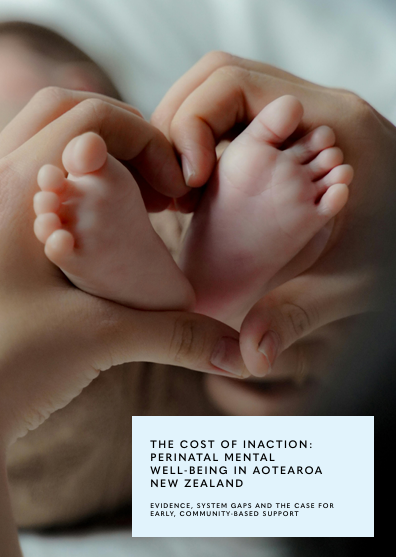
The Cost of Inaction: Perinatal Mental Well-being in Aotearoa New Zealand brings together evidence on the cost of perinatal mental distress and highlights the value of prevention, early intervention and community-based support.
It’s estimated that up to half of all māmā and birthing parents experience some form of mental distress during pregnancy and the early years, and thousands remain invisible to formal systems of care, missing out on the support they need.
A central finding of the report is that community organisations are often the first, most trusted and most enduring source of support for whānau, particularly Māori, Pacific, migrant, young and rurally isolated parents. Yet much of this contribution remains under-recognised and insufficiently resourced.
The report estimates that the impacts of perinatal mental distress cost New Zealand more than $2 billion each year, rising to as much as $4.3 billion when subclinical distress is included. Costs accrue over time and in different areas including health, education, welfare, child protection, and justice. Most tragically, 65% of these costs are carried by children over their lifetime through impacts on their health, education, productivity and wellbeing. The most important message is the opportunity to invest earlier in prevention and community-led support.
Ashlee McCormick, The Tindall Foundation, says the research helps strengthen understanding of the contribution communities make every day to the wellbeing of whānau across Aotearoa, and the importance of investing in community-led solutions:
“This report highlights the value of community-led support and is important evidence to help inform future investment, collaboration and decision-making,”
“The real opportunity now is to build on what’s already working and ensure more whānau can access the support they need, when they need it. Community organisations are already making a significant difference for families across Aotearoa, and this research helps make that contribution more visible.”
Ashlee McCormick, The Tindall Foundation
The Tindall Foundation commissioned and supported this report as part of its long-standing commitment to ensuring parents and carers are empowered and supported to provide the best possible start in life for their babies and young children. Through the Foundation’s partnerships and donations over many years, they continue to invest in organisations working to strengthen the wellbeing of whānau and young children across Aotearoa.
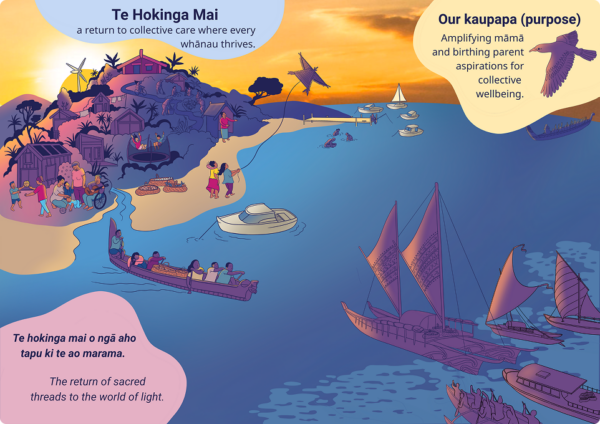
The report also reinforces the importance of initiatives already working towards these outcomes, including Te Hokinga Mai, a collective of community organisations, practitioners and people with lived experience advocating for maternal wellbeing and collective care by amplifying the voices of māmā and birthing parents. The Tindall Foundation supported the development of the collective and its ongoing work.
The evidence is clear: pregnancy and the first years after birth shapes the foundations of lifelong health, learning, resilience and wellbeing for baby. Investing in mothers is nation-building if we get it right. Strong maternal wellbeing is protective; it helps buffer families against adversity.
Eli Maiava, founder of Whare Manaaki o Te Tai Poutini and co-lead of Te Hokinga Mai, says the findings reinforce the importance of investing in the supports that help families thrive before challenges reach crisis point:
“Pregnancy and the first 5 years of life are a critical time of development for every pēpi, it shapes the foundations of their future well-being. Early, trusted, accessible support can make a significant difference to whānau during this period and reduce stress and isolation and other detrimental factors.”
“This report highlights the vital contribution that community makes in the life of pēpi and whānau every day. Community organisations that walk alongside whanau during these transitions, help create the conditions for wellbeing, often preventing the escalation of perinatal distress and longer term impacts on pēpi.”
Eli Maiava, Whare Manaaki o Te Tai Poutini
Community organisations play a critical protective role within the perinatal support ecosystem, absorbing risk early, stabilising whānau resilience and preventing avoidable escalation.